
What if a healing session offered less a promise of cure and more a quiet space to listen inward? If you’re curious about the benefits of energy healing, you may also wonder what people actually experience, how much is spiritual belief, and what science can confirm. Those are useful questions. Energy healing practices differ, and research on health-related effects remains limited. These practices shouldn’t replace medical or mental health care.
People may seek energy healing for calm, self-reflection, a sense of spiritual connection, or support through life’s transitions. Experiences are personal, not guaranteed, and can differ from one session to another. This article looks at the personal and spiritual benefits people commonly describe, what a session may involve, and how to approach one with realistic expectations. It also distinguishes spiritual support from evidence-based healthcare, so you can decide whether a practice such as VortexHealing® feels right for you while keeping your care and choices in your own hands.
Key Takeaways
- Explore the benefits of energy healing people may seek for reflection, spiritual connection, or support through life changes.
- Learn what a session may involve while recognizing that approaches and experiences vary between practitioners.
- Separate personal or spiritual meaning from evidence of medical effectiveness, and keep healthcare decisions grounded in qualified care.
- Use a checklist to clarify your intentions, ask practical questions, and decide whether a session feels right without expecting a particular outcome.
- Discover how Mara Brami’s personalised VortexHealing® sessions are offered remotely or in person.
What Are the Benefits of Energy Healing, and What Do People Seek?
Interest in energy healing can arise during many kinds of life experience: a demanding season, a major transition, grief, or a wish to understand yourself more deeply. People may be drawn to the chance to pause, turn their attention inward, and make room for reflection when everyday life feels full.
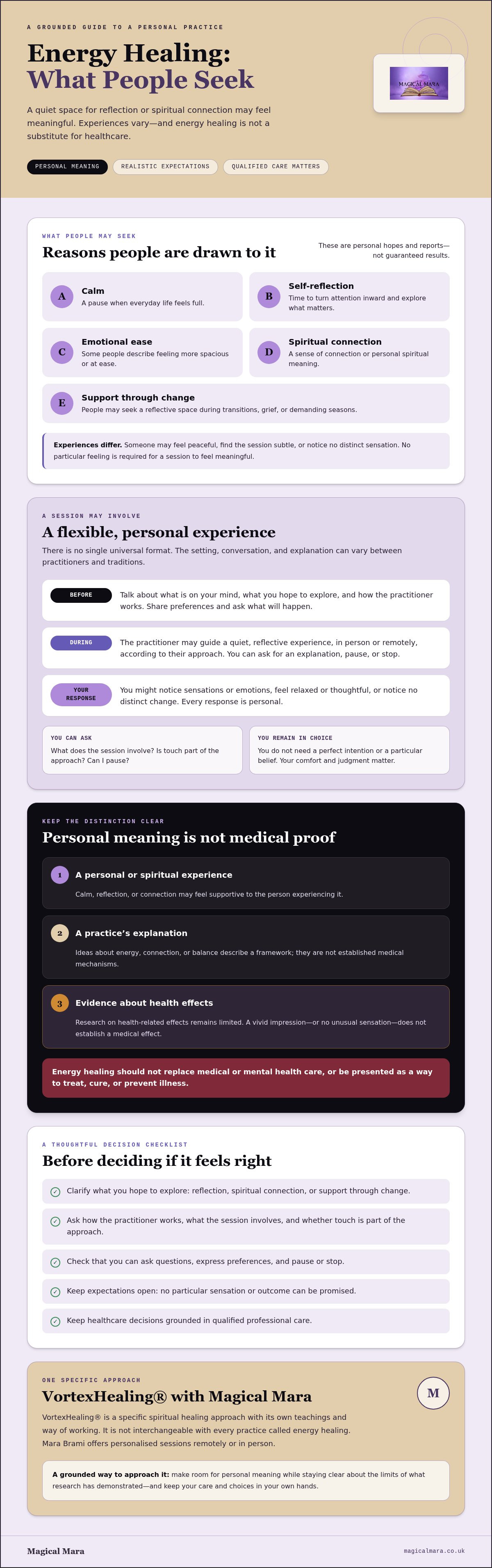
Energy healing is best understood as a complementary spiritual practice, not a medical treatment. People may seek it for calm, emotional support, a sense of connection, or time to reflect on what matters to them. The phrase benefits of energy healing can therefore refer to personal or spiritual experiences, rather than established changes to physical health.
What do people mean by energy healing?
Energy healing describes varied traditions and approaches, each with its own understanding of energy and how a practitioner works with it. Some use the language of a biofield, while others draw on spiritual concepts. Energy medicine offers a broad overview of these classifications and the debates surrounding them. Such frameworks describe how a practice is understood, not a confirmed medical mechanism.
VortexHealing® is one specific spiritual healing approach, with its own teachings and way of working. It isn’t interchangeable with every other method called energy healing. What someone notices, and how they interpret it, can vary. One person may feel peaceful, another may find the session subtle, and someone else may notice no distinct sensation.
Which benefits do people commonly hope to experience?
Some people describe feeling relaxed or more spacious after a session, as though they have found a little room to breathe. Others value the time for self-reflection or describe emotional ease and a deeper sense of spiritual connection. These are subjective reports, not predictable results. No particular sensation or shift needs to happen for a session to feel meaningful to someone.
Personal experiences can hold meaning for the person who has them, but they don’t establish a medical outcome. A sense of calm, for example, may feel supportive without showing that a health condition has changed. Energy healing shouldn’t replace assessment or care from qualified health professionals, or be presented as a way to treat, cure, or prevent illness. If it feels right to you, it may sit alongside appropriate professional support as a personal spiritual practice.
How Does Energy Healing Work Within a Session?
There isn’t one universal session format. Practitioners work within different traditions, so the setting, conversation, and explanation of the practice can vary. Knowing what to ask beforehand can make the experience feel less mysterious and help you decide what you’re comfortable with.
What might happen during an energy healing session?
A session may begin with a conversation about what’s on your mind and what you hope to explore. Before it starts, you can ask how the practitioner works, share preferences, and clarify what will happen. The practitioner may then guide a quiet, reflective experience, in person or remotely, according to their approach.
Your comfort matters throughout. You can ask for an explanation, say that something doesn’t feel right, or pause or stop. You don’t need a perfect intention or a particular belief. Some people notice sensations or emotions; others feel relaxed, thoughtful, or no distinct change. Each response is personal.
Experiences during or after a session vary, and no sensation or outcome can be promised. A vivid impression isn’t proof of a medical effect, just as noticing nothing unusual doesn’t mean you’ve done the session incorrectly.
How should readers understand energy-healing explanations?
Practitioners may describe their work through spiritual ideas about energy, connection, or balance. These descriptions explain the framework of a practice; they aren’t established medical mechanisms. You can allow room for personal meaning while staying clear about what medical research has and hasn’t demonstrated.
If a phrase feels unclear, ask the practitioner to explain it in everyday language. Useful questions include: What does the session involve? Is touch part of your approach? What choices will I have, and can I pause? A thoughtful practitioner should respect your questions rather than asking you to set aside your judgment or promising a particular result.
If you’re exploring the benefits of energy healing as a space for personal reflection, consider what would help you feel informed and at ease before booking. Mara Brami offers personalised VortexHealing® sessions remotely or in person. Before choosing an individual session, learn how the practitioner describes their approach and consider whether it feels like a fit.
Are the Benefits of Energy Healing Proven? Expectations, Evidence, and Limits
You can value a spiritual experience while still asking what research can establish. A person’s sense of calm or connection may be meaningful to them, but that experience alone can’t show that energy healing caused a medical change. This distinction matters when weighing the benefits of energy healing and deciding what role, if any, the practice should have in your life.
What does evidence say about energy healing?
Energy healing includes different practices, so evidence about one approach shouldn’t automatically be applied to another. The U.S. National Center for Complementary and Integrative Health (NCCIH) says that high-quality research showing Reiki has health-related benefits is lacking. That caution concerns medical claims; it doesn’t dismiss what an individual may feel or find spiritually significant.
A session may offer a quiet setting in which someone feels supported or relaxed. That experience can matter personally, but it doesn’t prove that a proposed spiritual energy mechanism is medically established. Nor can one person’s story show that the same outcome will happen for everyone.
| Reported experience | What it may mean personally | What cannot be concluded |
|---|---|---|
| Feeling calm or relaxed | The session felt restful or supportive | That a health condition improved because of energy healing |
| Feeling emotionally moved | The experience brought feelings or reflections into awareness | That the session treated a mental health condition |
| Sensing spiritual connection | The practice resonated with the person’s beliefs or inner life | That a spiritual explanation is a proven medical mechanism |
What should energy healing not promise?
No practitioner should guarantee healing, a specific sensation, or a particular result. Energy healing shouldn’t be presented as diagnosing, curing, preventing, or treating physical or mental health conditions. It’s a complementary spiritual practice, not a substitute for medical or psychiatric care.
If you have a health concern, speak with a qualified healthcare professional about assessment and care. You can also ask a practitioner to explain their approach and clarify any claims that sound medical. Testimonials may describe one person’s experience, but they aren’t proof that a practice works for everyone.
Your choice remains yours throughout. Declining a session, stopping partway through, or postponing while you consider your options are all valid. A grounded approach leaves room for personal meaning without asking you to set aside evidence, professional care, or your own comfort.
How to Decide Whether Energy Healing Feels Right for You
You don’t need to be certain, deeply spiritual, or expecting a particular sensation to consider a session. Start by noticing what you hope to get from the experience and whether the practitioner’s approach feels comfortable, clear, and respectful. The benefits of energy healing are personal, so a thoughtful decision matters more than trying to meet someone else’s expectations.
Before deciding, you might use this checklist:
- Name your intention. Perhaps you’d like quiet time for reflection, or you’re curious about a spiritual practice. Keep the intention simple and leave room for the experience to be subtle, unexpected, or uneventful.
- Ask how the practitioner works. Find out how they describe their approach and what generally happens during a session. Ask about their training or qualifications, too. Consider whether the explanation is clear and grounded.
- Clarify the format. Check whether sessions are in person or remote, and what communication to expect before, during, and afterward. Consider whether the arrangement feels practical and comfortable for you.
- Discuss boundaries and consent. Share any comfort needs and ask how the practitioner handles consent, including whether touch is involved. You should be able to ask questions, pause, or stop without pressure.
- Check the limits. Ask what the practitioner does not offer. Energy healing isn’t medical or psychiatric care, and a practitioner shouldn’t claim to diagnose or treat a health condition.
How can you keep expectations and boundaries clear?
Your intention can be a gentle point of focus, not a demand for a certain result. You might hope to make space for reflection while remaining open to feeling peaceful, emotional, curious, or noticing no change. There’s no need to interpret every sensation as a sign or decide immediately what the experience means.
Keep your healthcare choices separate from a spiritual session. If you have physical or mental health concerns, consult a qualified healthcare professional, and don’t delay recommended care in favour of energy healing. You can choose another form of support, wait until you feel ready, or decide that a session isn’t for you. Each is a valid choice.
If an individual VortexHealing® session feels like something you’d like to explore, you can explore personalised VortexHealing® sessions with Mara Brami, available remotely or in person. The decision remains yours, and a good fit begins with clear information and a sense of ease.
Exploring VortexHealing® with Magical Mara
After considering what energy healing can and cannot offer, you may feel curious about a particular spiritual approach. Mara Brami is a certified VortexHealing® practitioner at the highest training level. VortexHealing® is her specific spiritual healing practice, not clinical healthcare or a guaranteed route to a particular result.
What can readers expect from Mara's VortexHealing® sessions?
Mara offers personalised individual sessions shaped around the person’s circumstances and what they hope to explore. You might bring a question, a period of change, or simply an intention to make space for reflection. The session is complementary spiritual work. It doesn’t diagnose or treat health conditions, and your experience may differ from someone else’s.
Sessions are available remotely or in person, in English or Italian. Magical Mara serves clients globally from London, so a remote format may make the practice accessible from different places. Before choosing, explore how the approach is described and consider whether it aligns with your interests and comfort. No particular sensation or outcome is promised.
Which option might suit your interest?
A one-to-one session may suit someone who wants a personalised space for individual exploration. Online group healings are a separate, shared-format offering, which may appeal if you’re interested in taking part alongside others. The formats are distinct, so review their details and decide which, if either, feels appropriate for you.
There’s no need to rush. If you’re exploring the benefits of energy healing and would like to learn more about Mara’s approach, you’re welcome to explore Mara’s VortexHealing® sessions. Reading about the practice can be a gentle first step; whether to continue exploring or take part remains entirely your choice.
Choose the Kind of Support That Feels Right
The benefits of energy healing may be meaningful as personal or spiritual experiences, such as a pause for reflection or a sense of connection, but they aren’t guaranteed medical outcomes. You can approach a session with curiosity and realistic expectations, while keeping questions, boundaries, and comfort central.
Energy healing is complementary support, not a replacement for medical or psychiatric care. You can explore it, choose another form of support, or decide not to book a session. The choice is yours.
If you’d like to learn about VortexHealing® as a personal spiritual practice, Mara Brami is a certified practitioner offering individual sessions remotely or in person, in English and Italian. You’re welcome to explore Mara’s VortexHealing® sessions and consider whether her approach aligns with your interests.
Take the time you need. The next step, whatever it is, can begin with listening gently to yourself.
Frequently Asked Questions
What are the most common benefits of energy healing?
People commonly seek energy healing for a sense of calm, time for reflection, emotional support, or spiritual connection. Some describe feeling relaxed or more spacious afterward, while others notice no particular change. These are personal reports, not guaranteed effects or proof of a medical benefit. The benefits of energy healing can mean different things to different people, so it helps to approach a session with curiosity rather than a fixed expectation.
Is energy healing scientifically proven?
Energy healing hasn’t been established as a treatment with proven health benefits across its different approaches. The U.S. National Center for Complementary and Integrative Health says high-quality research showing Reiki has health-related benefits is lacking. That evidence question is separate from whether someone finds a session personally meaningful or relaxing. A spiritual explanation of energy shouldn’t be presented as a scientifically confirmed medical mechanism, and testimonials don’t establish that a practice works for everyone.
Can energy healing help with stress or anxiety?
Some people report feeling calmer or more supported after an energy healing session, but this doesn’t show that it treats anxiety or another health condition. Responses differ, and research evidence for health-related effects varies by practice. If stress or anxiety is affecting your wellbeing, consider speaking with a qualified healthcare professional. Energy healing, if you choose to explore it, should remain complementary and shouldn’t delay or replace professional assessment or care.
What happens during an energy healing session?
Session formats vary by practitioner and tradition. A practitioner may first ask what you’d like to explore, explain their approach, and then guide a quiet session. It may take place in person or remotely, depending on the service. You might notice sensations, emotions, relaxation, or no distinct change. Ask in advance what to expect, whether touch is involved, and how you can pause or stop. Your comfort and consent matter throughout.
Can energy healing be done remotely?
Some practitioners offer sessions remotely, while others work in person; the format depends on the practice and provider. Magical Mara offers individual VortexHealing® sessions remotely or in person, in English or Italian, serving clients globally from London. If you’re considering remote work, ask how the session is arranged, what communication you’ll have, and what the practitioner’s approach involves. The format doesn’t guarantee a particular experience or outcome.
Is energy healing a replacement for medical treatment?
No. Energy healing is a complementary spiritual practice, not a substitute for medical or psychiatric care. It shouldn’t be used to diagnose, treat, cure, or prevent health conditions, and it’s wise not to postpone recommended care in favour of a session. For physical or mental health concerns, consult a qualified healthcare professional. If you choose to explore energy healing, keep it separate from decisions about your treatment and care.
How do I choose an energy healing practitioner?
Ask how the practitioner describes their approach, what a session involves, and what training or qualifications they have. Clarify whether sessions are remote or in person, how consent and boundaries are handled, and what the practitioner does not offer. Be cautious of promises to cure conditions or guarantee results. A practitioner should welcome questions and respect your choice to decline or stop. Choose someone whose explanations and manner feel clear and comfortable to you.
Do you need to believe in energy healing for it to work?
You don’t need to adopt a particular belief to ask questions or explore a session. People interpret experiences through their own perspectives, and there’s no established evidence that belief guarantees an outcome. You might approach the session as time for quiet reflection while remaining open to whatever you notice, including nothing in particular. If a practitioner pressures you to believe or promises a result, you can step back and reconsider. If you’d like to learn more about this approach, explore Mara’s VortexHealing® sessions and decide whether they feel right for you.

